
Sustainable horse hay, from French meadow to your stable
Good hay should be good for your horse and for the land it grows on. Here is how our hay is grown, dried, pressed, stored and delivered, with the facts behind every step, so you can judge for yourself.
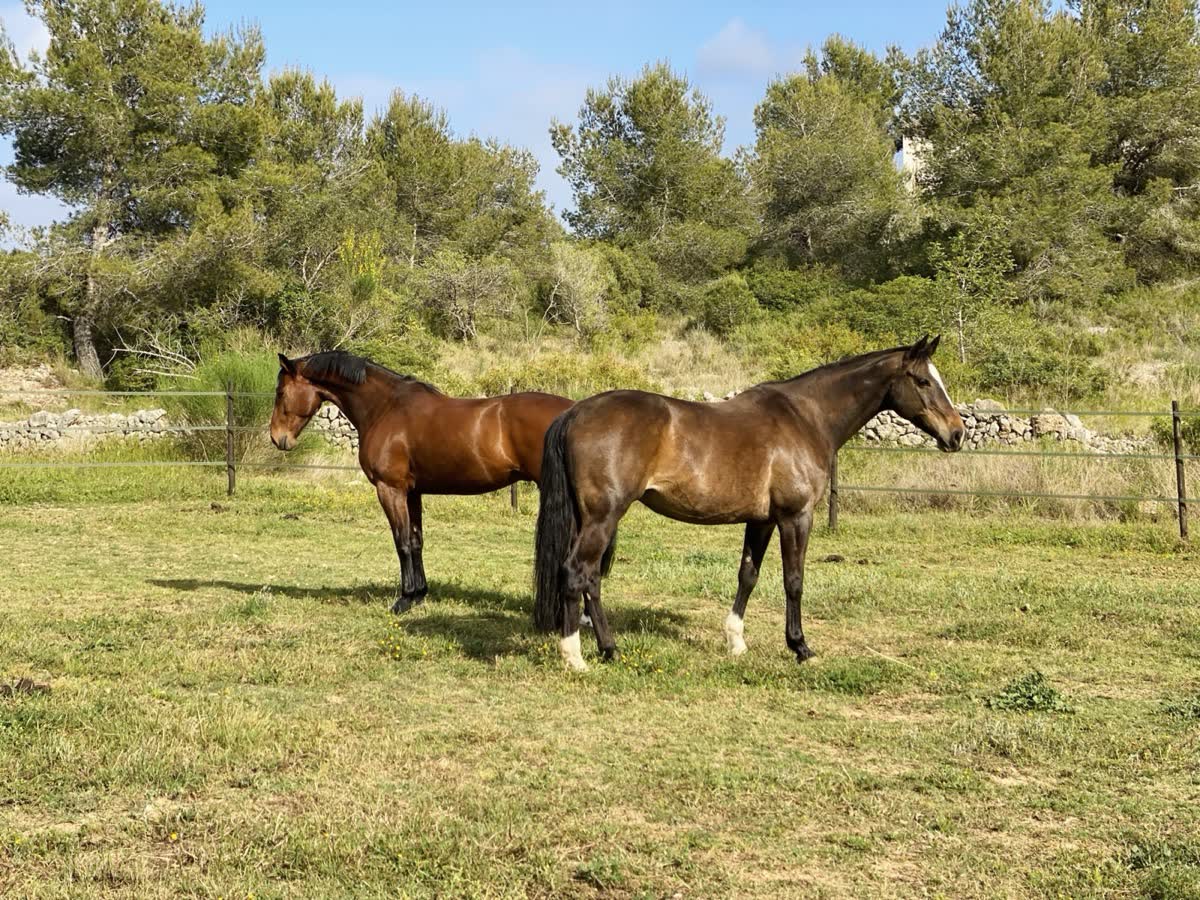
Facts, not green labels
Hay is an agricultural product with a real footprint. It grows on land, it is harvested by machines and it travels to reach your stable. We don't pretend otherwise.
What we can do is choose meadows that are good for the soil, press the hay so it travels and stores efficiently, and waste as little of it as possible. On this page we only tell you what we can show you. Where something is still work in progress, we say so.
French river valleys and Portuguese growers
Our French hay comes from a specialist forage house in Saint-Gilles, in the south of France, that has traded hay since 1988 and works with around 300 French farms. Every grower works to a written specification for cutting, drying and storage.
- Meadow hay: a first cut from river-valley meadows such as the Val de Sarthe and the Val de Meuse, where the winter floods leave fertile silt behind every year.
- Longchamp®: grown to specification on meadows sown with a selected grass variety and kept in place for three to five years.
- Alfalfa: grown on four-year contracts from certified non-GMO seed.
- Portuguese hay: ryegrass and meadow hay from local growers, stored at our depots in Loulé (Algarve) and Almeirim (Ribatejo).
We use independent lab analyses when selecting our forages.
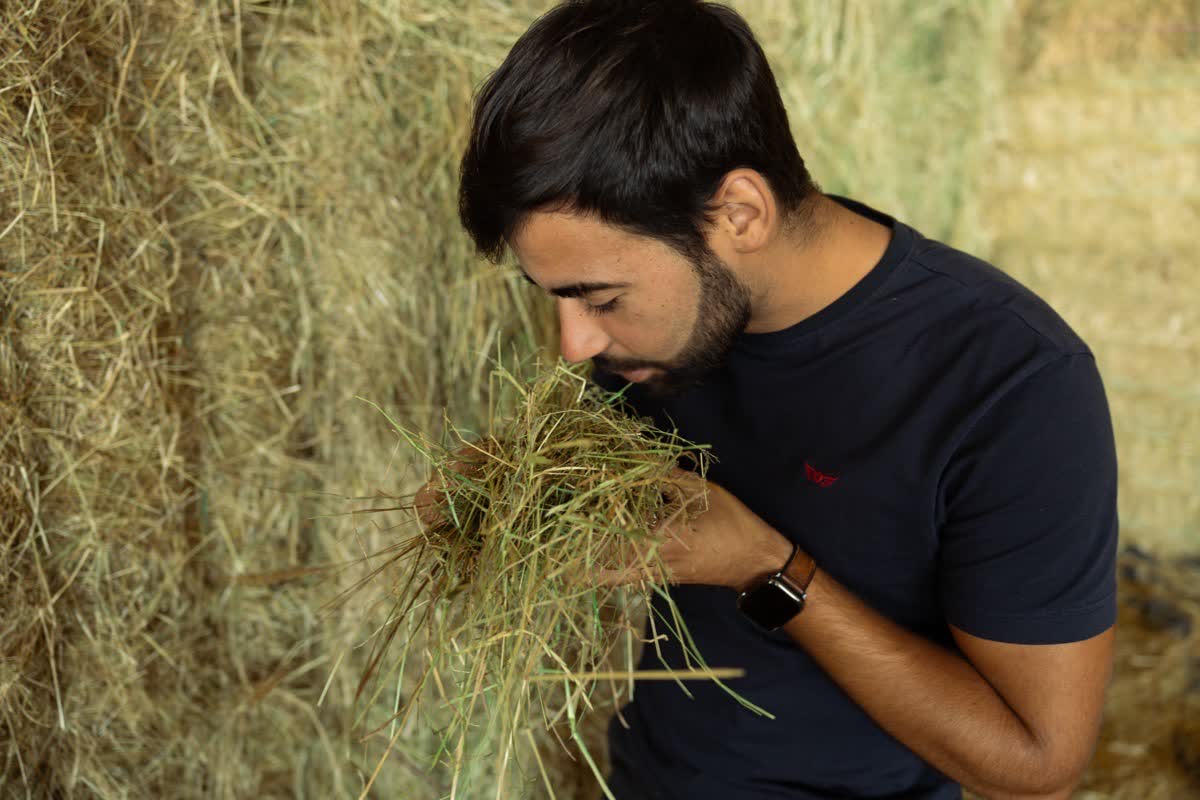
From field to bale
Naturally sun-dried in the field
After cutting, the grass dries in the field in sun and wind, the traditional way, before it is baled.
No pesticides during haymaking
No pesticides are used during the haymaking process, from cutting and drying through to baling.
Cut high, kept clean
Fields are mown 7 to 9 cm above the ground. That keeps soil and stones out of the bale and leaves the meadow ready to regrow.
Moisture checked at every stage
Moisture is measured from field to storage, with about 14% as the target. Lots that miss the quality criteria are downgraded, not sold as premium.
Why long-lived meadows matter
Hay meadows are not ploughed every year. That makes them one of the gentler ways to use farmland.
Soil that stays put
Meadows kept for several years build soil structure and organic matter, and their roots protect the field against runoff and erosion.
Cleaner water
Permanent grass cover slows rainwater down and filters it on its way to the water table.
Room for wildlife
A meadow that stays in place for four years gives insects, birds and small animals time to settle, unlike a crop that is ploughed every season.
Nitrogen from the air
Alfalfa is a legume. It fixes nitrogen from the air itself, so it needs far less synthetic fertiliser than most crops.
What double compression is, and why it matters
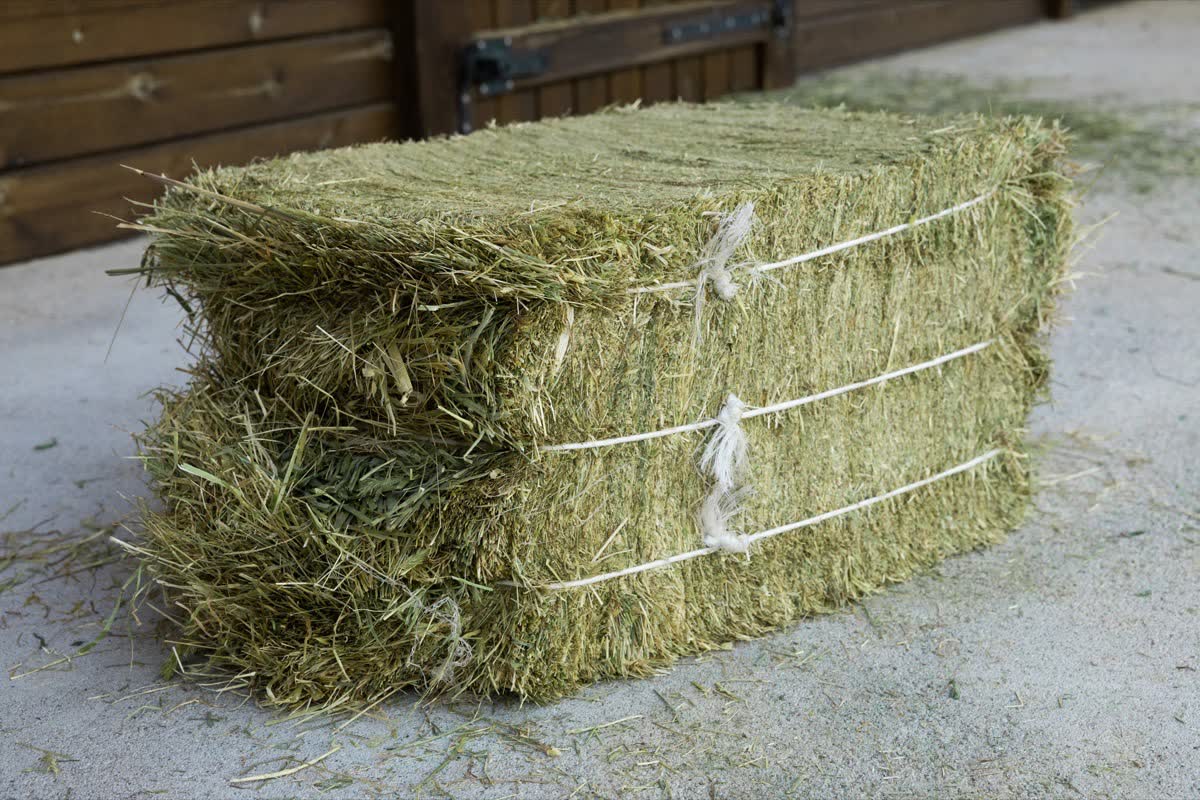
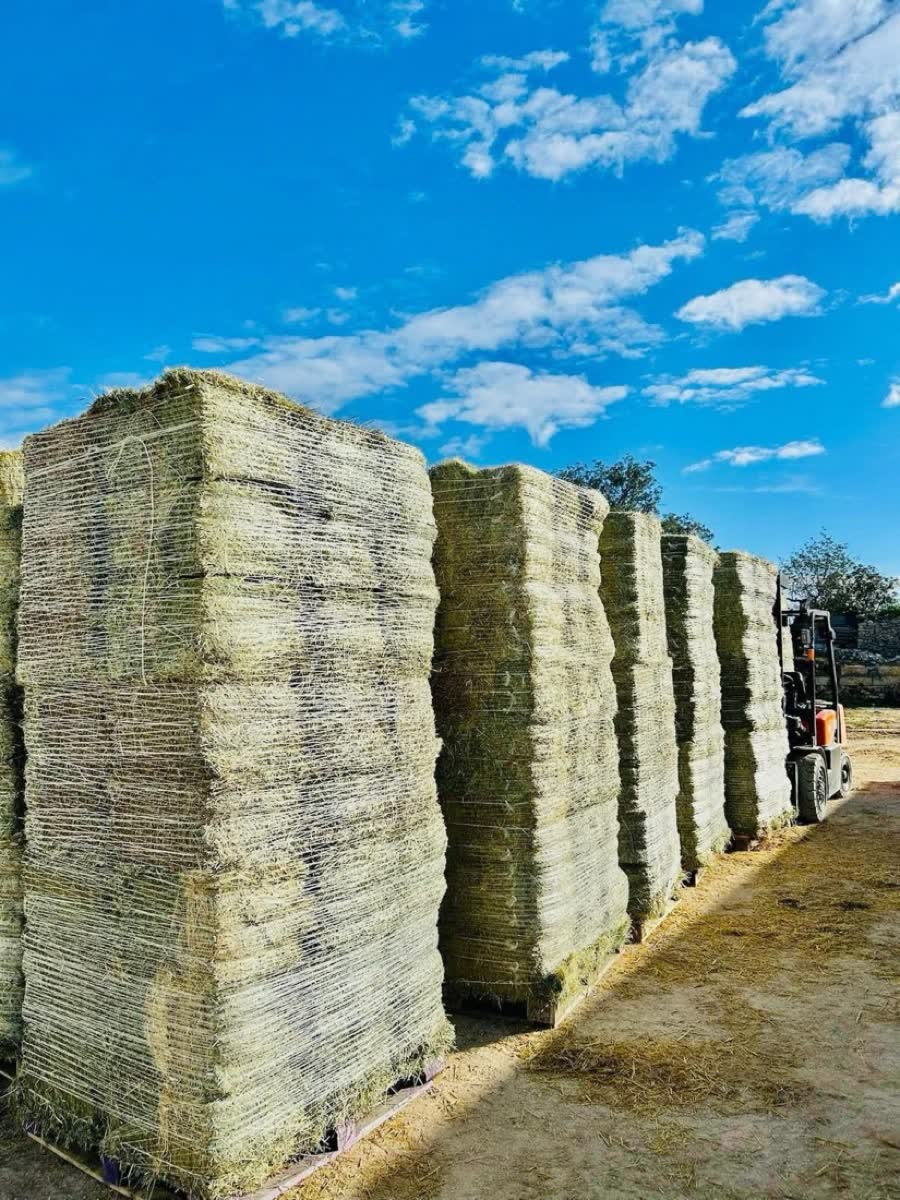
After the hay is baled in the field, the bales are pressed a second time under high pressure into dense, uniform blocks of about 24 kg.
It is the least glamorous step in the whole process. It is also the one that makes the biggest difference, both for your horse and for the footprint of every kilo we deliver.
About ⅓ more bales per truck
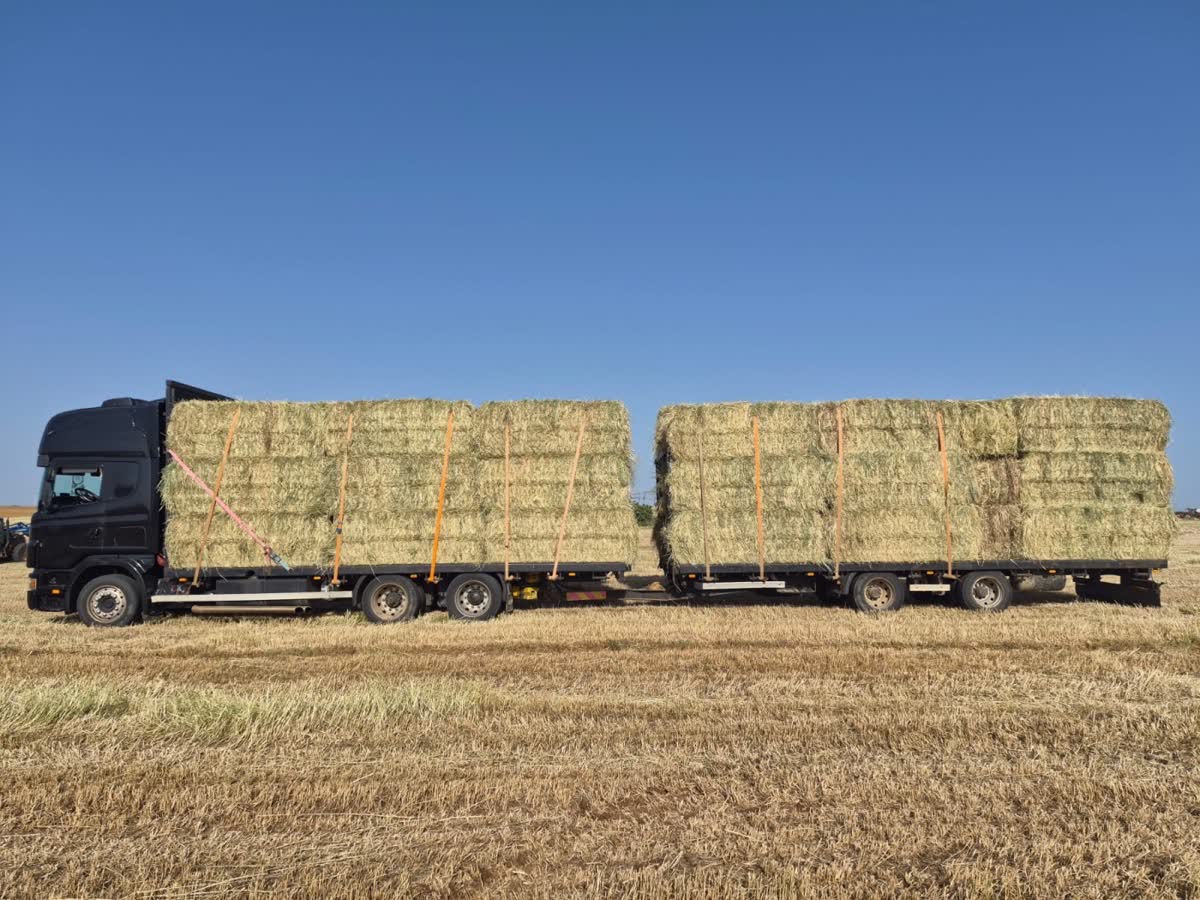
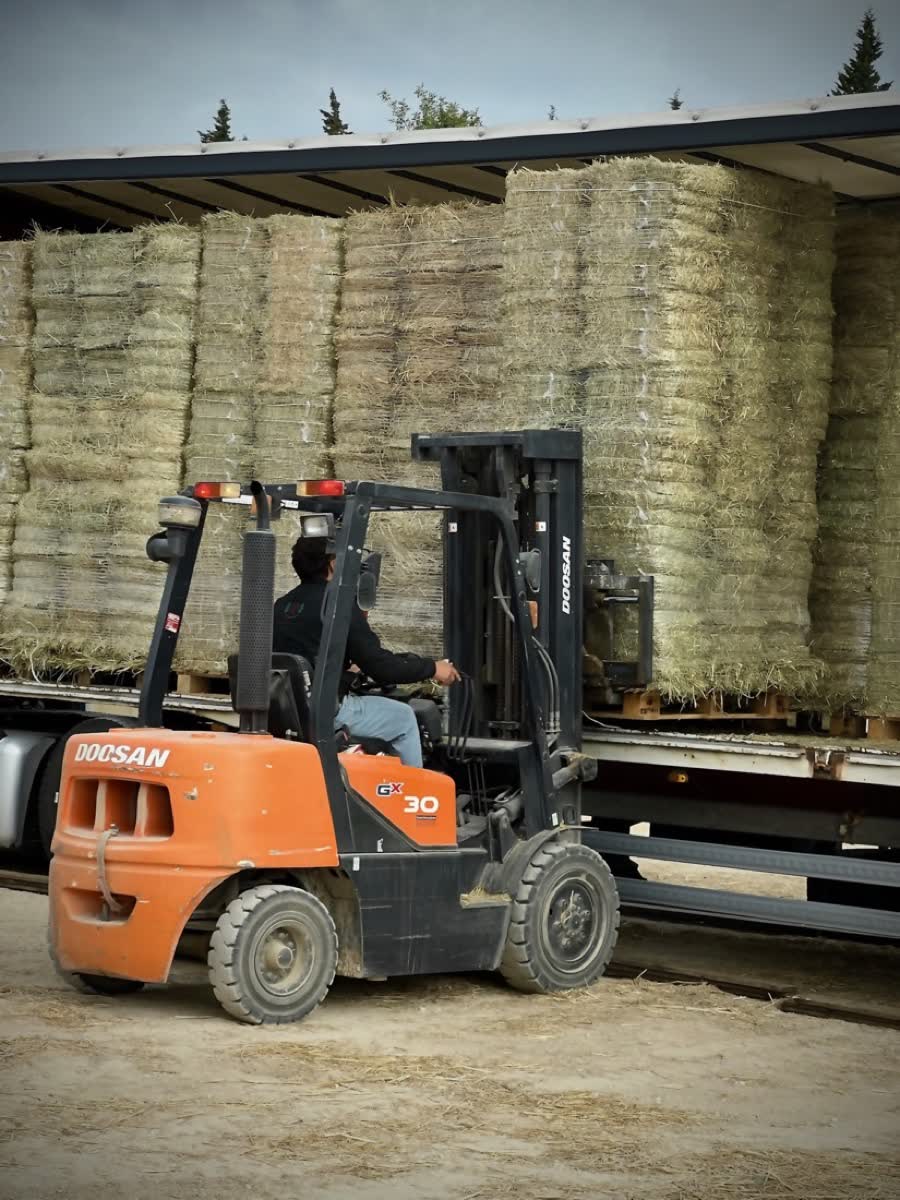
Compared with traditional bales, about a third more bales fit on the same truck. Fewer trips move the same amount of hay.
Less storage space
Firm, square blocks stack tight and straight, so the same tonnage takes noticeably less room in your barn.
Fresher for longer
Pressing out the air slows the oxidation that fades colour, smell and nutrients, and removes the moisture pockets where mould starts.
Less dust
Pressing and handling shake loose fine particles, so the hay is kinder to your horse's airways. More on low-dust hay.
Less waste
Even blocks break into clean flakes. We budget about 5% feeding waste on these bales, against about 15% on a round bale.
Easy to portion and carry
Each block weighs about 24 kg and splits into regular flakes, so rations are easy to weigh. One person can carry a bale, and they travel well to shows.
What double compression adds up to
Full trucks, planned routes
Double-compressed bales go onto pallets and are shrink-wrapped, so a load arrives tidy and undamaged. One full truck carries 1,056 bales of French meadow hay, around 25 tonnes, in a single trip.
From our depots in Loulé and Almeirim we plan routes and combine orders, so the hay travels as full as possible. Deliveries are made by the Prime Hay team or a trusted transport partner.
Packed under solar roofs, stored with care
Our French hay is pressed and packed at our partner's facility in the south of France, where the packing hall and storage buildings are covered with solar panels.
In Portugal the pallets are stored dry and off the ground at our depots, so the hay keeps its quality until the day it reaches your stable.
What we are still working on
The biggest part of our footprint is transport. Bringing hay from France is a choice we make for consistent quality, and we balance it with good Portuguese hay for horses that do well on it. Compare French and local hay.
Next on our list: fuller routes, less wrapping film per pallet, and helping owners feed exactly what their horse needs. The feeding calculator works out the right amount of hay per day, because the most sustainable bale is the one that doesn't go to waste.
Sustainable hay, answered
Where does Prime Hay's hay come from?
Our French hay comes from a specialist forage house in Saint-Gilles, in the south of France, that has traded hay since 1988 and works with around 300 French farms. The meadow hay is a first cut from river-valley meadows such as the Val de Sarthe and the Val de Meuse. Our Portuguese hay comes from local growers and is stored at our depots in Loulé (Algarve) and Almeirim (Ribatejo).
Is your hay organic?
We don't sell our hay as certified organic. What we can say is that it is naturally sun-dried in the field and that no pesticides are used during the haymaking process. Where a product carries an organic certificate, we state it on that product page.
What is double-compressed hay?
Double-compressed hay is baled in the field and then pressed a second time under high pressure into dense, uniform blocks of about 24 kg. With less air inside, the hay keeps its colour, smell and nutrients for longer, sheds fine dust and is easy to stack, portion and transport.
How many bales fit on one truck?
One full truck carries 1,056 double-compressed bales of French meadow hay, around 25 tonnes. That is about a third more bales than a truck of traditional bales, so fewer trips move the same amount of hay.
Does double-compressed hay really cause less waste?
Yes. The firm blocks break into clean, even flakes that horses pull apart less. We budget about 5% feeding waste on these bales, against about 15% on a round bale. They also keep their quality longer in storage.
Is double-compressed hay better for dust-sensitive horses?
Often it helps, but it is one part of the answer. Pressing and handling shake out fine dust, and lowering respirable dust is one of the changes vets recommend for equine asthma. Ventilation and bedding matter just as much, so talk to your vet before changing the forage of a diagnosed horse.
How is the hay delivered?
By pallet, delivered by the Prime Hay team or a trusted transport partner across Portugal and Spain. Larger yards can order a full truck, the most efficient way to buy hay.
Last updated: September 2026
More about our hay
We’d love to see your horses thrive 🐴
Nothing makes us happier than seeing your horses enjoy their hay. Share a photo, tell us how they’re doing, or send your experience, and become part of our growing community of happy horse owners across Portugal & Spain. We feature our favourites on Instagram and across the site (with your permission, of course).
Feeding tips & first access to new batches
Join 600+ stables across Portugal & Spain getting expert forage advice, early delivery slots and member-only offers.
No spam, just hay. Unsubscribe anytime. Prefer WhatsApp updates? Message us.